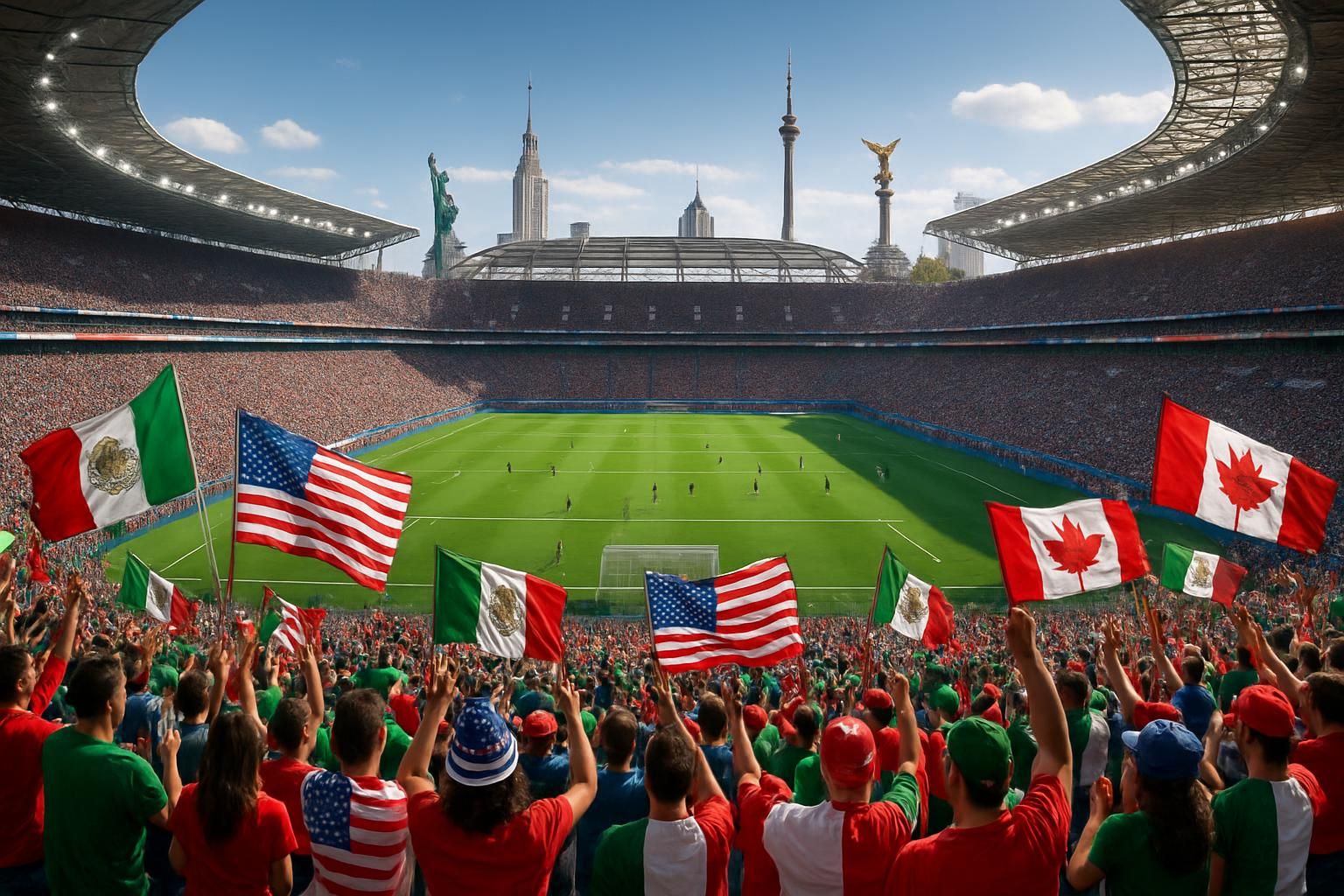
The 2026 FIFA World Cup is shaping up to be a monumental occasion in the world of soccer, stretching across North America in an unprecedented collaboration between the United States, Canada, and Mexico. This isn’t just any football tournament; it’s the biggest one ever, featuring a jaw-dropping 48 teams and 104 matches, an expansion that adds a hefty dose of drama and opportunity to international soccer competitions. Kicking off on June 11, 2026, and running through July 19, the tournament spans 16 stadiums in 16 cities, offering fans an abundance of action across three host countries.
For the first time ever, a World Cup final will unfold at the iconic MetLife Stadium in New Jersey, while the tournament’s grand opening match returns to the legendary Estadio Azteca in Mexico City. With the USA slated to host the lion’s share of matches—including all the quarterfinals onward—the setup promises to showcase the best of North American infrastructure and football enthusiasm. Canada and Mexico each contribute to the extravaganza with select matches, making it a truly continental festival.
Noteworthy is the introduction of a new Round of 32 stage, making the knockout phase longer and adding more high-stakes matches. In addition, innovations like the first-ever halftime show during the World Cup final seek to Americanize the spectacle, much to the chagrin of traditional soccer purists but perhaps essential to hook newer audiences. However, the tournament is not without its controversies—from ticket pricing to geopolitical tensions surrounding certain qualified teams—ensuring discussions off the pitch are as heated as the games themselves. The 2026 World Cup promises to be an international event like no other, blending soccer passion with political dynamics and massive fan engagement across three major nations.
Where Exactly Will the 2026 FIFA World Cup Be Held? Discover the Host Countries and Stadiums
The 2026 tournament will be held across three host countries: the United States, Canada, and Mexico. These nations will collectively stage matches in 16 stadiums, spread over 16 vibrant cities renowned for their love of soccer and top-tier sports infrastructure. The American venues dominate with eleven stadiums, including historically significant and massive venues like AT&T Stadium in Arlington, Texas—which will host the most matches of any venue—and the MetLife Stadium, the site of the tournament final. Canada and Mexico offer three and two stadiums respectively, each strategically chosen to represent their country’s soccer culture and capabilities.
Mexico shines with the world-famous Estadio Azteca in Mexico City, a stadium steeped in World Cup history, having hosted two World Cup finals in the past. Canada makes its debut as a World Cup host, with venues like BMO Field in Toronto, which has recently been expanded to meet FIFA’s requirements. Expect the stadiums to be buzzing with energy, as soccer fans from around the globe descend on North America.
This geographic distribution balances the demands of an expansive tournament across a sprawling continent, posing logistical challenges but also promising diverse and rich fan experiences. Traveling fans and teams will navigate three time zones and a mix of climates, from the warm streets of Guadalajara to the cooler air of Vancouver. The sheer size of the tournament and the number of matches means it’s the largest international football event in history in terms of scale and scope.
Breaking Down Key Tournament Dates and First Matches in the Host Cities
The action starts on June 11, 2026, with the opening match between Mexico and South Africa at Estadio Azteca in Mexico City. This nod to history revives the same opener that took place in 2010 at the very same stadium. The United States and Canada join the fray the following day, hosting their opening games on June 12 in SoFi Stadium (Los Angeles) and BMO Field (Toronto), respectively.
Matches in the group stage will run through June 27, with the top teams advancing to the brand-new Round of 32, a fresh knockout phase that adds excitement between the group stage and the traditional Round of 16. The tournament culminates with the final match on July 19 at MetLife Stadium, East Rutherford, New Jersey. The kickoff time is 3:00 PM Eastern, making it a prime televised event for US viewers while accommodating fans worldwide.
The schedule also includes historic milestones — for example, the match between Tunisia and Japan on June 20, marking the 1,000th match in FIFA World Cup history. Such moments add layers of storytelling and legacy to an already packed soccer tournament, energizing fans and broadcasters alike.
How Many Teams and What’s Unique About the 2026 World Cup Format?
One cannot talk about the 2026 FIFA World Cup football tournament without highlighting the expanded team roster. The number of participating teams jumps from 32 to 48 teams, split into 12 groups instead of 8. Each group contains 4 teams who play a round-robin format, with teams earning points to qualify. Notably, the top two in each group, plus the eight best third-place teams, advance to the newly introduced Round of 32. This new knockout phase prolongs the thrill and provides more chances for underdog stories.
Although expanding the field has critics lamenting the dilution of quality, this move opens the World Cup to new entrants. 2026 welcomes four countries making their World Cup debut: Cape Verde, Curaçao, Jordan, and Uzbekistan. Fan favorites and footballing giants alike will battle for glory, challenged by the longer tournament and unpredictable third-place qualifiers.
As the host nations, United States, Canada, and Mexico automatically qualify, ensuring home support in their group matches. This brings a triple-layered local cheering roster, boosting interest and attendance. The reformatted tournament spans 39 days, about a week longer than previous editions, to accommodate the increased number of games without overwhelming players and fans.
Innovations and Innovations: How the 2026 World Cup Will Change the Game
Besides the expanded teams and stages, 2026 plans to debut the first halftime show in a World Cup final. Curated by Global Citizen with creative input from industry pros like Chris Martin of Coldplay, this 25-minute performance aims to blend cultural celebration with sporting spectacle. Reactions range from excitement to skepticism, as traditionalists argue it risks disrupting the flow of football.
From a technology perspective, newer stadium turf adjustments and climate control measures address previous concerns, especially given that some host cities face high summer temperatures. Mandatory hydration breaks will cool down players in hot venues, combining health with some welcome TV ad time.
Broadcasting remains a massive component, with FOX and Telemundo covering the tournament in the U.S., streaming in 4K and offering dual-language accessibility. Fans around the world are already gearing up with detailed match schedules and predictions, similar to content available on specialized sites, helping them navigate the abundance of matches.
Qualified Teams and Playoffs: Who Made the Cut for 2026?
All 48 teams are set, with the final six playoff spots clinched by March 31 via UEFA and FIFA intercontinental playoffs. Bosnia and Herzegovina’s dramatic win on penalties over Italy ended the latter’s streak of World Cup appearances — a stunning upset in international football narrative. Other playoff winners include Sweden, Türkiye, Czechia, DR Congo, and Iraq, the latter returning after a 40-year absence in a heroic qualification campaign.
The breadth of teams promises a diverse tournament, including traditional powerhouses, emerging football nations, and debutants, enriching the football tapestry. From England’s thrilling group-stage clash with Croatia to matchups featuring underdogs like Curaçao, the 2026 World Cup offers unpredictability and excitement unlike any before.
Key Challenges and Criticism Surrounding the 2026 World Cup
While the scope of the event is impressive, it naturally brings a mountain of logistical and political challenges. Fans have already voiced concerns about ticket prices, especially at venues in the United States where dynamic pricing models have caused sticker shock. Additional issues include immigration policies complicating travel for supporters of some qualified nations.
Geopolitical tensions cast long shadows—for instance, Iran’s visa issues for the World Cup draw stirred diplomatic unease, while violence and security concerns in parts of Mexico have raised alarms as stadiums there prepare for kickoff. The tripartite host model also complicates transportation and scheduling across vast distances and multiple time zones.
Environmental advocacy groups highlight the carbon footprint of such a sprawling tournament, amplified by the extensive air travel required between host cities, challenging FIFA’s sustainability promises. As football seeks to unite global fans, this World Cup underscores the complex interplay between sport, politics, and society in 2026.