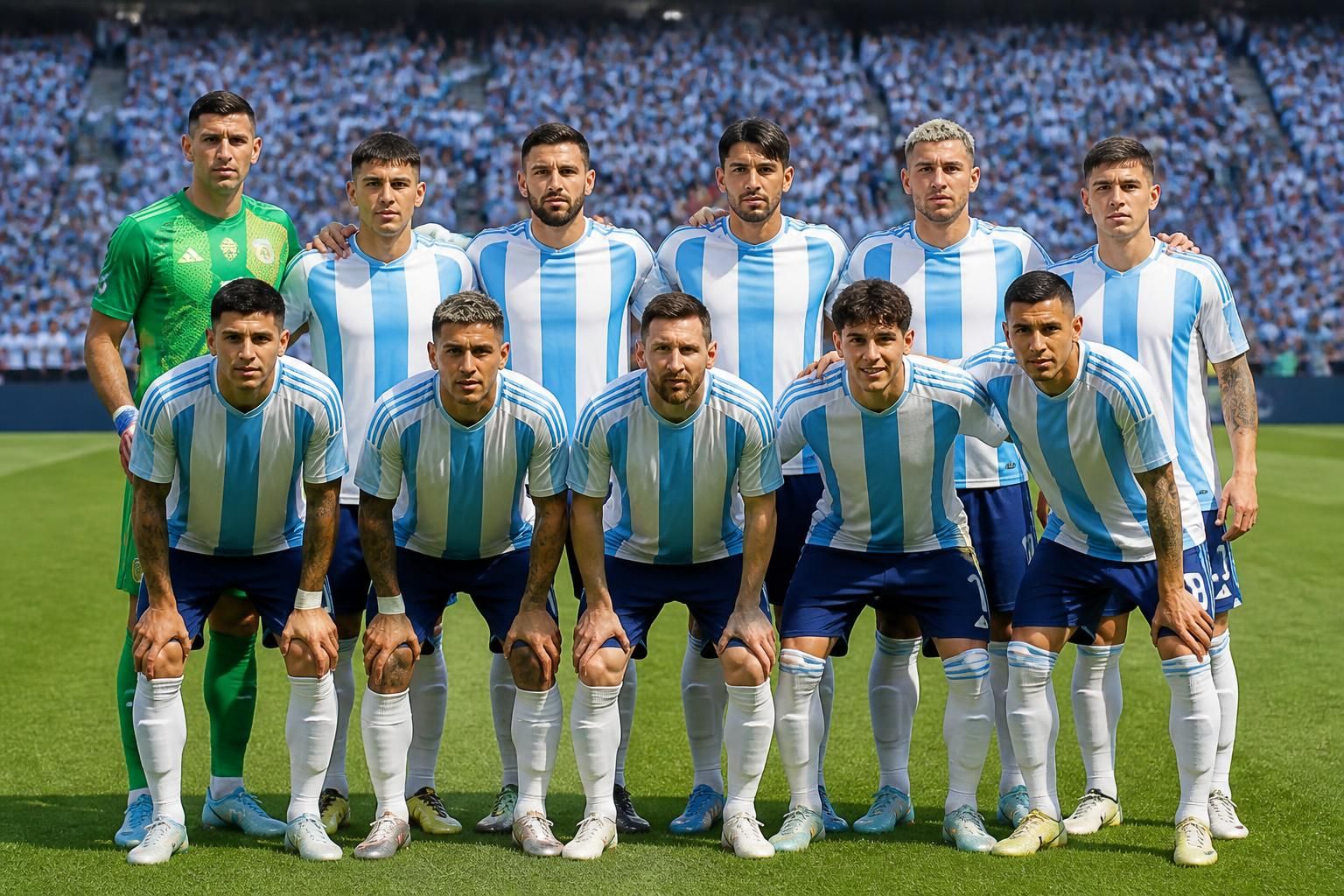
Argentina, fresh off their 2022 World Cup triumph, are gearing up for a very different kind of challenge in 2026. The tournament’s expanded format and multi-country hosting in North America will test the squad’s depth, adaptability, and stamina more than ever. The stakes are high, with Lionel Messi potentially making what could be his final World Cup appearance, keeping fans and analysts alike buzzing about the team’s predictions for starting lineups and tactical nuances. From juggling travel fatigue to integrating emerging talents without losing the magic that delivered them historic glory, Argentina’s road to retaining their crown is a fascinating spectacle in the build-up to the tournament.
Quick overview:
- ⚽ Argentina enters 2026 as defending champions, placing them among tournament favorites.
- 🛫 Multi-nation hosting (USA, Canada, Mexico) demands player rotation and strategic planning for travel and recovery.
- 👑 Messi’s role remains crucial but uncertain, influencing squad dynamics significantly.
- 🔄 Core from the 2022 team persists, with promising youngsters adding fresh energy, especially in wide and midfield roles.
- 📊 Scaloni’s tactical flexibility will be key against Group J opponents Algeria, Austria, and Jordan.
Argentina’s Tactical Edge & Team Lineup Predictions for World Cup 2026
Despite that iconic image of Emiliano Martínez celebrating in Lusail after 2022, the 2026 World Cup challenges require more than just emotional highs and memories. The tournament’s spread across three countries introduces new tactics where travel logistics and recovery are as crucial as game plans on the field. The squad’s backbone—keeper Martínez, defenders Cristian Romero and Lisandro Martínez, midfield maestros Rodrigo De Paul, Enzo Fernández, and Alexis Mac Allister, plus forwards Julián Álvarez and Lautaro Martínez—remains rock solid. But the full backs and creative wide players, especially in the wake of Ángel Di María’s retirement, demand significant changes with talents like Valentín Barco and Alejandro Garnacho vying for positions.
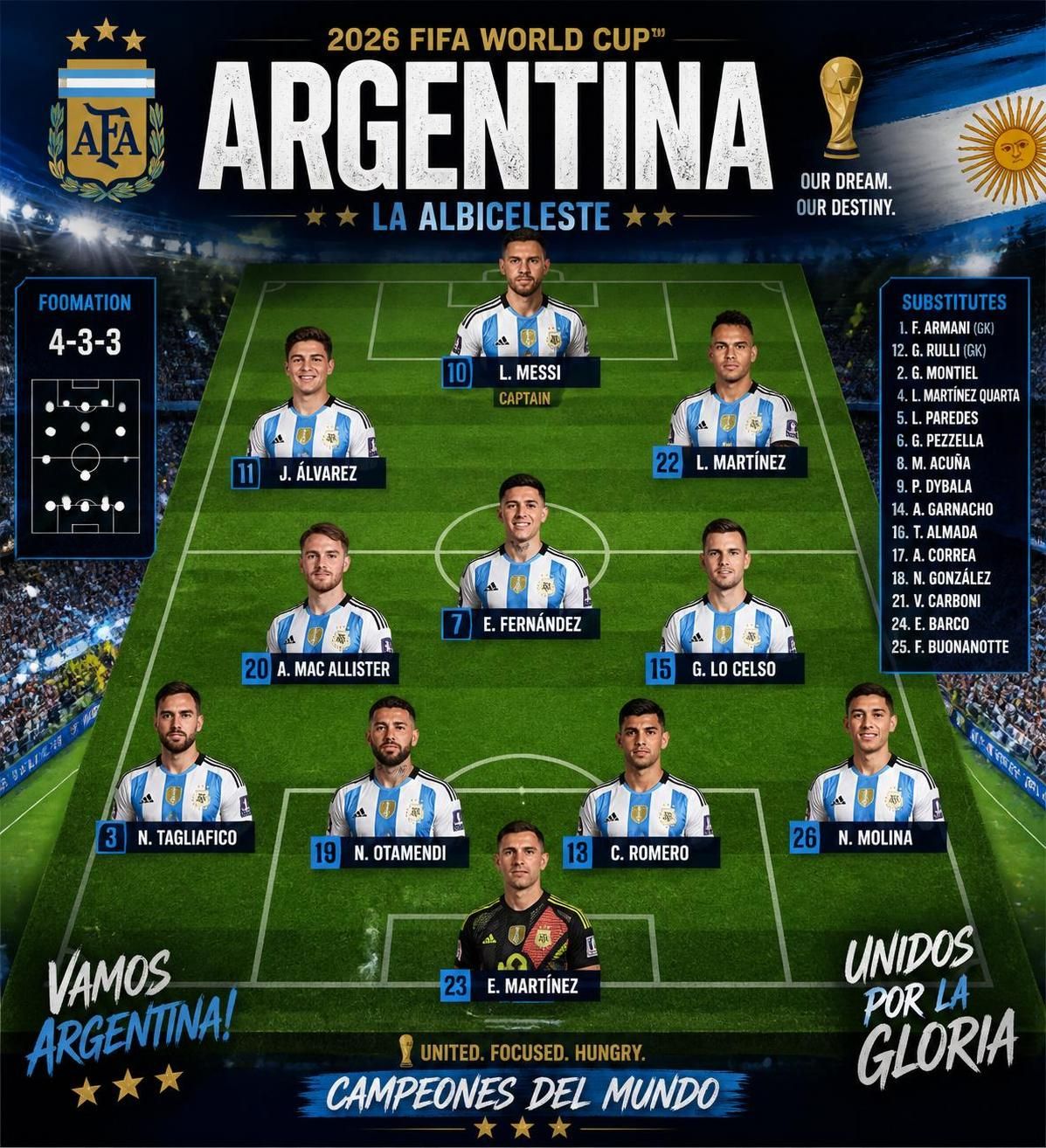
Argentina’s predicted starting eleven anticipates use of a hybrid 4-3-3 and 4-4-2 formation, using Messi either as a false nine or right-sided playmaker depending on his fitness. Lautaro Martínez and Julián Álvarez provide a complementary strike partnership, blending pressure and poise. The midfield’s work rate and tactical fluidity will seek to outpace and outmaneuver rivals, capitalizing on Scalon’s history of adaptive strategies.
Group J and the Challenges Ahead: What to Expect
Argentina’s World Cup path starts in Group J alongside Algeria, Austria, and Jordan—teams with differing styles and threats. Algeria’s physicality, Austria’s disciplined European game, and Jordan’s unpredictable flair represent a manageable but far from easy trio. Understanding these contrasting playing styles will be vital; as highlighted in recent analyses, the squad must be ready to switch tactics mid-game and manage the exhausting travel schedule that comes with playing in venues spread from Kansas City to Arlington.
For those intrigued by tactical matchups, detailed insights into Argentina’s clashes can be found here for the Austria game and more on their opening day clash against Algeria. These previews shed light on how Lionel Scaloni’s squad is preparing with intense precision behind the scenes.
Key Players Who Could Define Argentina’s Journey
At the core of Argentina’s predicted roster is the ever-reliable Emiliano Martínez, whose penalty prowess and shot-stopping continue to intimidate opponents. A robust center-back partnership should emerge from Cristian Romero and Lisandro Martínez, blending aggression with controlled distribution, marking a slight shift from Otamendi’s more reckless but passionate style in 2022.
Meanwhile, midfield dynamo Rodrigo De Paul is expected to continue his relentless box-to-box energy, supported by the vision and creativity of Enzo Fernández and Alexis Mac Allister. Up front, the rotation between Lautaro Martínez and Julián Álvarez offers more tactical options than ever, capable of adapting to the diverse challenges in different group and knockout matches.
While Messi’s exact role is a hot topic, his presence alone influences the team’s attacking patterns and dictates squad rotation. Managers and fans alike hold their breath, knowing the squad’s shape will pivot around his availability and style of deployment during the tournament.
Adapting to 2026’s Unique Demands: Rotation and Recovery
The 2026 World Cup, hosted across North America, poses unprecedented physical and logistical challenges. Long-distance travel between cities like Kansas City and Arlington demands a squad that can rotate intelligently without losing competitive edge. This reality elevates lesser-known squad members who excel in physical resilience and adaptability, creating tough calls for the coaching staff—especially in positions like full back, where youth such as Valentín Barco competes against seasoned veterans like Nahuel Molina.
Argentine analysts now closely monitor GPS and sprint data to gauge players’ capacity to handle tight match schedules and diverse climates, underscoring a data-driven approach supplementing traditional scouting and coaching methods.
Beyond the Pitch: Coaching, Culture, and Legacy
Under Lionel Scaloni, Argentina blends a winning mentality with a forward-looking ethos. After securing consecutive major titles including the 2022 World Cup and Copa América, the coach aims to balance honoring veterans and integrating promising talents. His tactical flexibility—often switching between 4-3-3, 4-4-2, and occasionally 3-5-2—provides the blueprint for managing physical demands and opponent diversity.
The squad’s identity goes beyond just tactics. It is a psychological fortress built on years of shared triumphs and adversity, designed to foster resilience in a grueling tournament environment. Scaloni’s approach promises a team that is both adaptable and fiercely loyal to the legacy Messi leaves behind.
For a broader perspective on World Cup lineups and strategic projections, explore more nuanced discussion at this in-depth analysis of global teams.