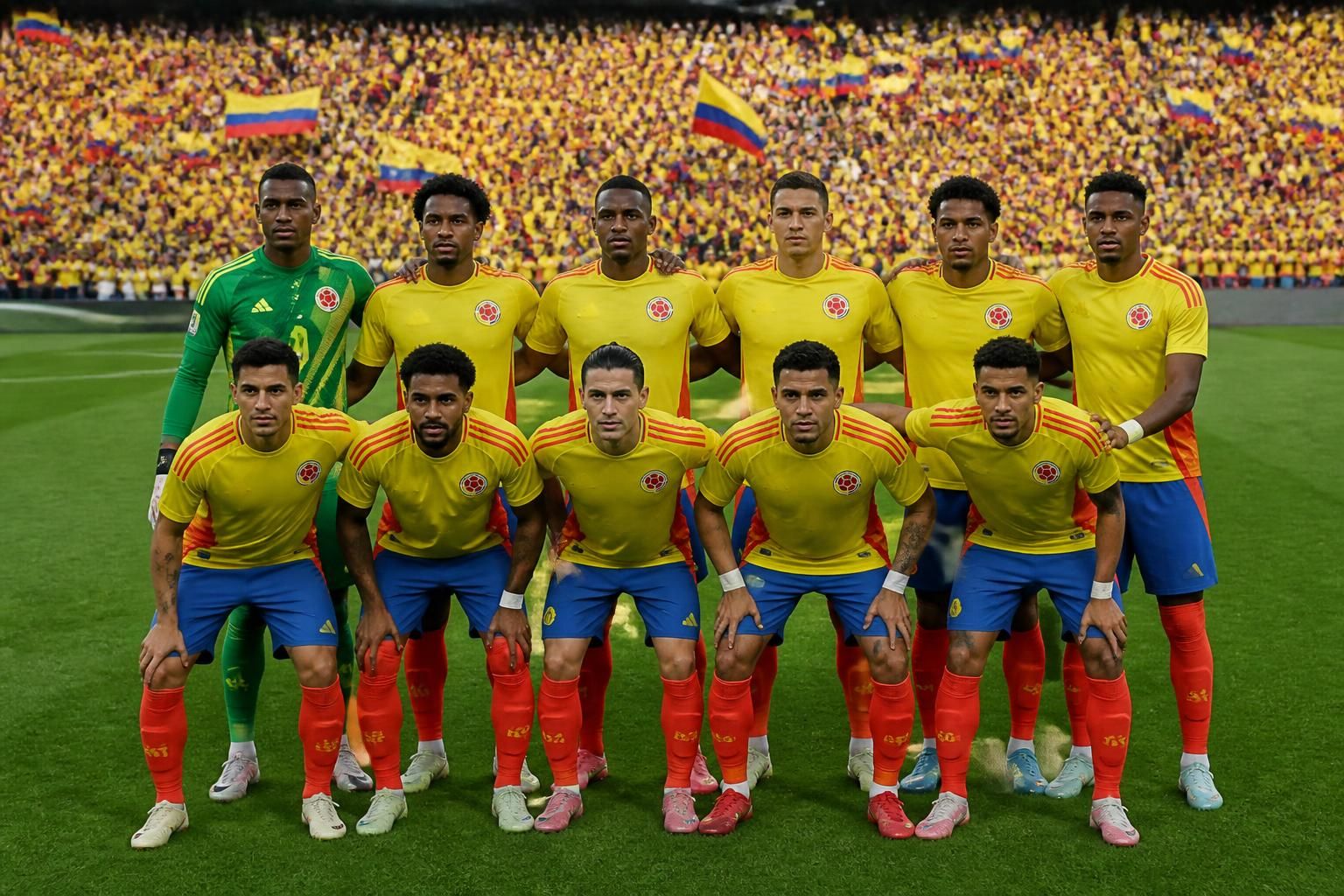
The 2026 FIFA World Cup is fast approaching, and Europe’s neighboring United States, Mexico, and Canada are gearing up to host the grand stage for international football. Among the hopeful contenders, Colombia’s team lineup has just been revealed, sparking both excitement and debate among soccer fans everywhere. With captain James Rodríguez making what is likely his final World Cup bow and dynamo winger Luis Díaz leading the charge, Colombia is ready to face a challenging Group K alongside Portugal, DR Congo, and Uzbekistan. As the tournament runs from June 11 to July 19, 2026, the spotlight will be on whether this talented roster can break Colombia’s long-standing quest for World Cup success.
Despite the buzz, the squad’s composition hints at both promise and vulnerability. Coach Néstor Lorenzo’s selection, composed of 26 players announced on May 25, balances seasoned veterans with emerging stars. But past tournaments have taught us that even the most balanced lineups don’t guarantee seamless performances. The group stage fixtures pit Colombia against a debutant team in the high-altitude Mexico City, a rising African side in Guadalajara, and a European heavyweight in Miami. That alone paints a picture of a tough road ahead as they seek to avoid early elimination and possibly reignite South America’s footballing prestige.
Colombia’s 26-Man Team Roster for the FIFA World Cup 2026: Who Made the Cut?
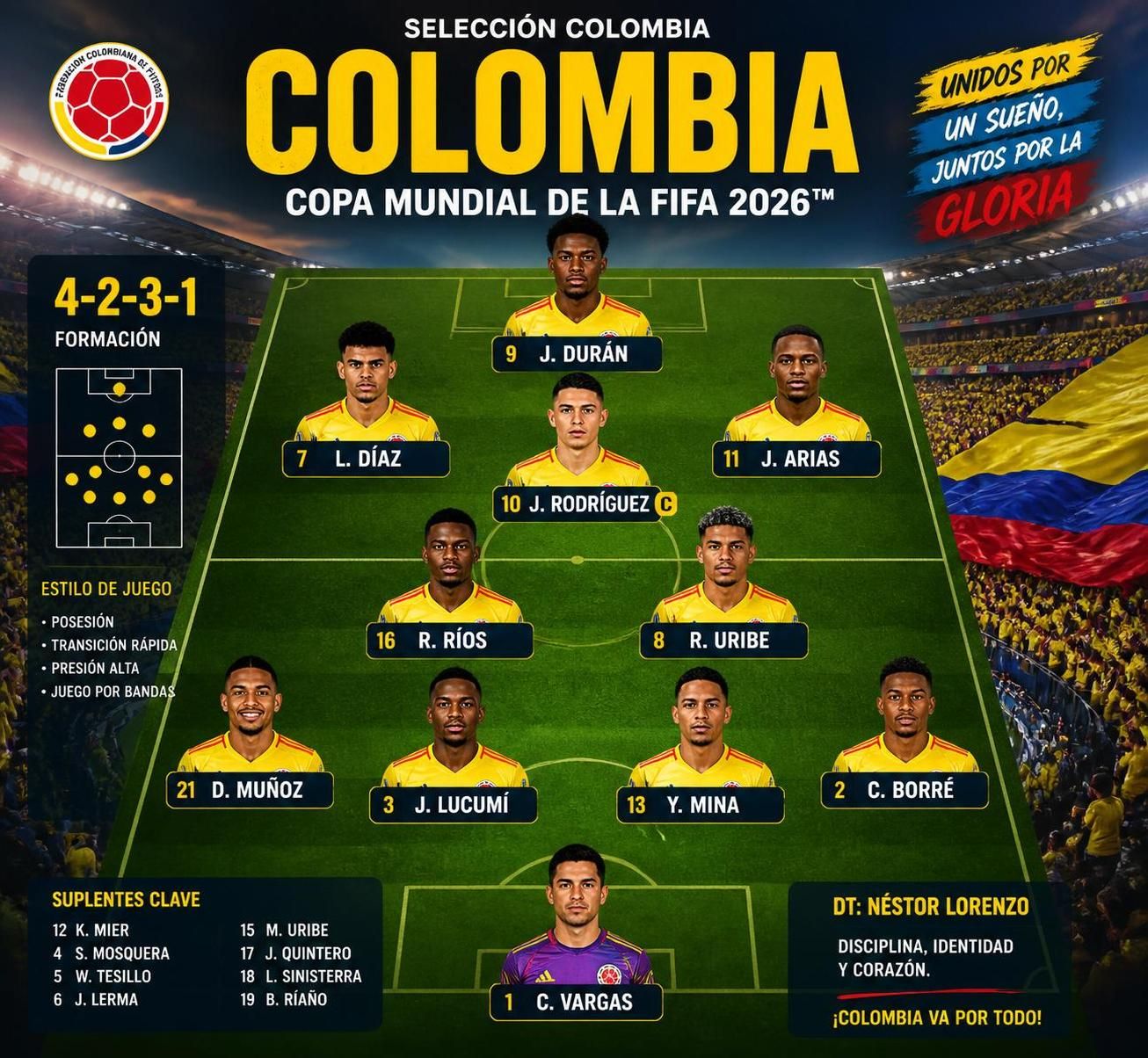
The official squad calls on a mix of domestic and international talents. Goalkeepers include Camilo Vargas (Atlas), David Ospina (Atlético Nacional), and Álvaro Montero (Vélez Sarsfield). The defense boasts players like Daniel Muñoz (Crystal Palace) and Yerry Mina (Cagliari), veterans of multiple international campaigns. In midfield, the team counts on James Rodríguez—now signed temporarily with Minnesota United to keep sharp—and up-and-comers like Richard Ríos from Benfica.
Up front, Luis Díaz headlines a group of forwards including Luis Javier Suárez, not to be confused with the famous Uruguayan, currently lighting up the Portuguese league at Sporting CP. This blend of experience and youth seeks to provide the spark needed to advance beyond the group, but depth and injury risks remain talking points.
A Team Built to Challenge—but Will It Work?
Team strategies revolve around James Rodríguez’s vision and ball control, with Luis Díaz’s blistering pace expected to stretch defenses. However, their opponents in Group K pose serious tests. Portugal stands out as the eventual group favorite, boasting top-tier rank and offensive depth. Facing Portugal at Miami’s stadium is the litmus test, with expectations favoring the Europeans but hopes high for a Colombian upset.
Meanwhile, debutants Uzbekistan offer a deceptively tricky encounter high up in Mexico City’s altitude, favoring whichever team acclimatizes faster. And then there’s DR Congo—an up-and-coming African powerhouse likely to test Colombia’s physical and set-piece defenses in Guadalajara. Navigating this group demands tactical discipline and resilience from Lorenzo’s squad, who must balance ambition with pragmatic game management to even dream of the knockout stages.
Preparing for the World Cup: Friendlies and Fan Engagement in Colombia
Before jetting off to North America, Colombia gears up with two crucial warm-up friendlies: first against Costa Rica in Bogotá, then versus Jordan in San Diego. These matches serve as rehearsal, allowing Lorenzo to finalize his starting eleven and defensive pairings. The Bogotá match is strategically set at high altitude, prepping players for similar conditions in Mexico City, while the San Diego fixture helps acclimatize the squad to U.S. venues.
Meanwhile, soccer fans in Colombia are already making plans. Matches will air on Caracol Televisión and RCN, the national mainstays, but many expats and locals prefer the vibrant atmosphere of public viewing spaces. Medellín’s Provenza district, Bogotá’s Zona G, and Cartagena’s Getsemaní beachside come alive with projectors and loud cheers. For insights on the best hotspots to catch every goal and moment, check out the guide on where to watch Colombia’s matches during the FIFA World Cup 2026.
Colombia’s World Cup Journey Reflects Bigger Football Narratives
James Rodríguez, at 34, encapsulates the bittersweet arc of Colombia’s international footballing hopes—his career marked by highs, multiple club journeys, and now a farewell tour on soccer’s biggest stage. Paired with dynamic counterparts like Luis Díaz and emerging midfielders such as Richard Ríos, Colombia tries to rewrite recent history that’s seen them fall short of elusive World Cup glory.
This World Cup also highlights the global shift with expanded teams and new host venues spanning three countries. For detailed group previews, including how Uzbekistan shapes up against Colombia, visit the comprehensive match analysis. Let’s just say, Group K promises drama, tactical intrigue, and yes—a fair share of nail-biting moments as Colombia seeks to forge a path amidst some of the globe’s toughest competition in international football.