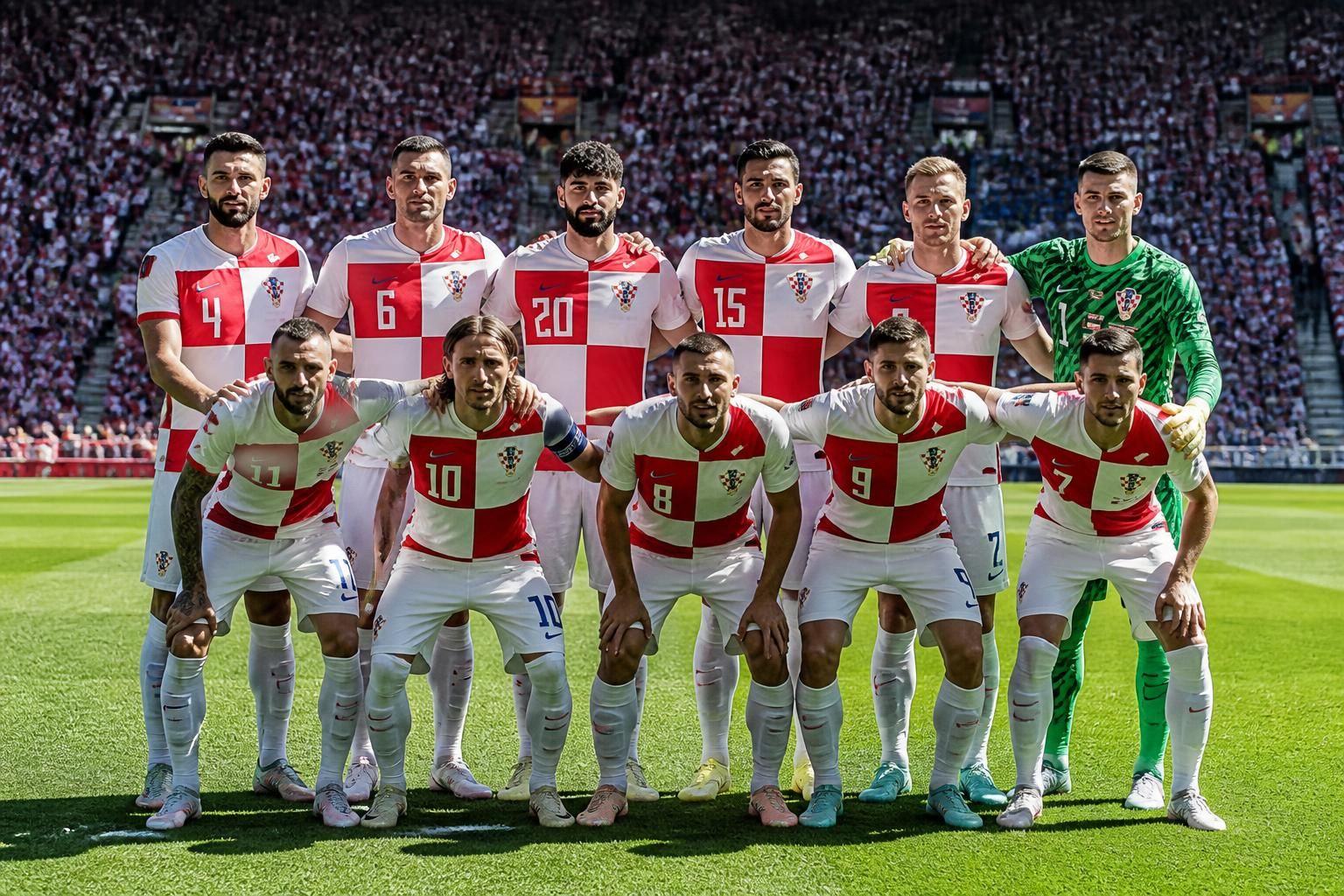
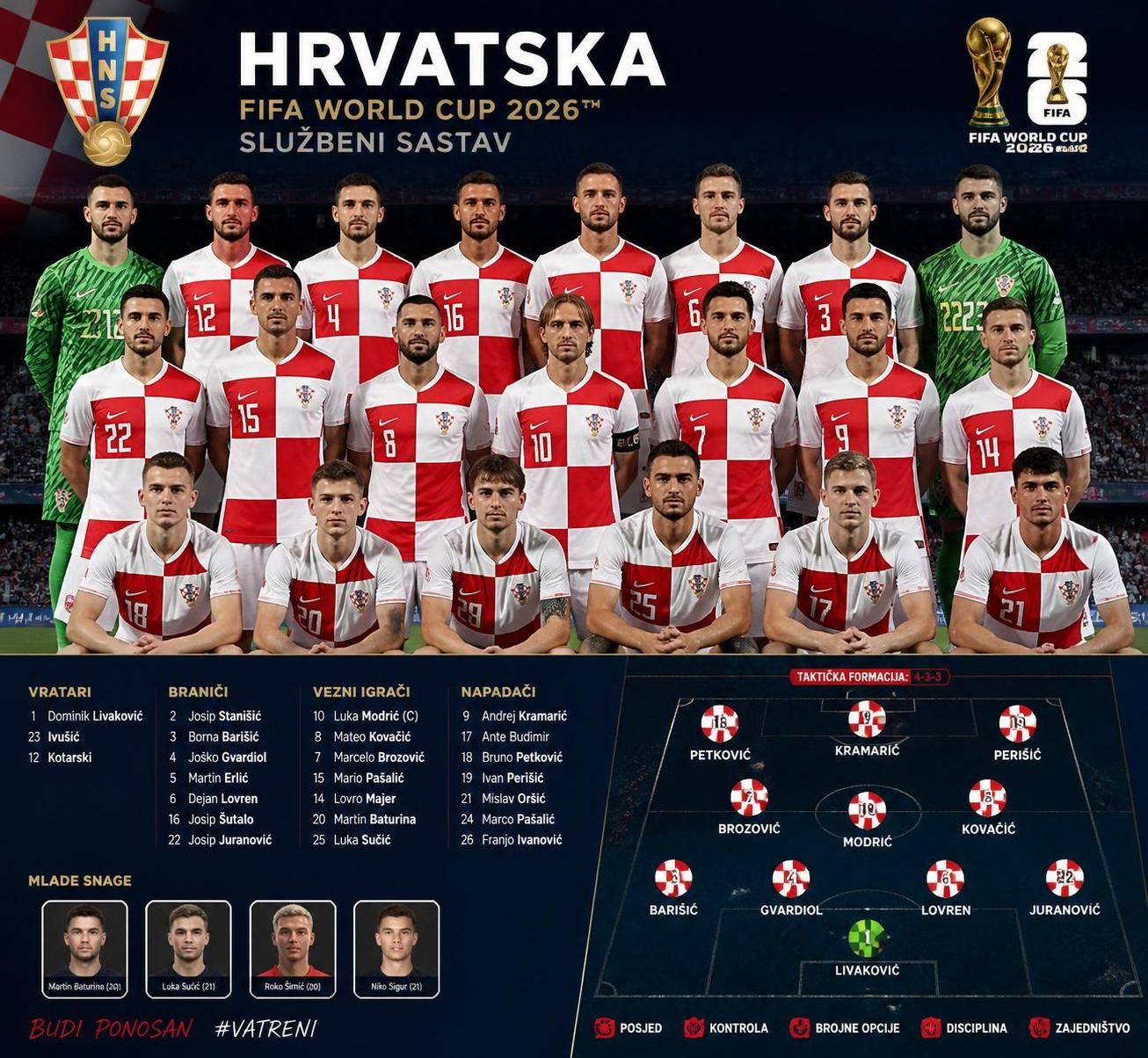
Croatia arrives at the 2026 World Cup packed with a blend of seasoned legends and emerging talents, ready to challenge the traditional soccer powerhouses once again. This team lineup emphasizes tactical pragmatism, character, and that indefinable Croatian spirit that has earned the Vatreni a reputation as perennial dark horses in global football. Although Luka Modrić’s era nears its twilight at 40 years old, his record-breaking fifth World Cup appearance ensures Croatia retains an invaluable master of midfield orchestration. Under Zlatko Dalić’s steady hand, Croatia approaches the tournament with a disciplined and flexible formation, typically a 4-2-3-1 or 4-3-3, geared to minimize defensive errors and maximize ball retention. Their group stage clashes against England, Panama, and Ghana will test this strategy early, with a spotlight on beating England – a rivalry pulsing with history and fresh tension. The inclusion of teenage defender Luka Vušković signals a strategic bridging of Modrić’s legacy into Croatia’s future, promising both grit and flair across the pitch.
Briefly summarized, Croatia’s 2026 World Cup squad includes: Defensive resilience led by the likes of Joško Gvardiol, although his fitness remains a question mark; a midfield engine room centered around Modrić and Mateo Kovačić’s dynamic presence if fully fit; and a versatile attack spearheaded by Ivan Perišić and Andrej Kramarić. Tactical discipline is Croatia’s hallmark – with a defense that conceded just four goals in qualifiers – but questions linger about the longevity of its aging key players. Still, expect the Vatreni to enter North America with their trademark unyielding spirit, aiming to once again overachieve on the world soccer stage.
Croatia’s 2026 World Cup Squad: Key Players and Tactical Formations
No doubt, the centerpiece of this Croatia team lineup is the legendary Luka Modrić. Now with AC Milan, his vision and game reading skills ensure the Vatreni midfield remains a commanding force. At 40, Modrić carries not just experience but an artistry in his passing and positioning that defies age. His ability to dictate tempo underpins Croatia’s tactical approach, especially in pivotal moments against formidable opposition. Alongside him, Mateo Kovačić, despite battling an Achilles injury this season, brings relentless energy and pressing capabilities that add crucial balance. Nikola Vlašić and young talents like Martin Baturina add creative sparks further upfield while the defense leans heavily on Manchester City’s Joško Gvardiol, a modern left-back whose pace and defensive prowess make him irreplaceable when fit.
Modrić’s Fifth Dance: Orchestrating Croatia’s Midfield Strategy
Modrić’s participation represents more than just a personal milestone — it’s the heartbeat of Croatia’s tactics. His role as a deep-lying playmaker bridges defense and attack, using his experience to control possession and deliver pinpoint passes. Croatia’s strategy revolves around leveraging his composure and football intelligence to maintain structure and patiently break down opponents. When Modrić is on his game, the team adopts a tactical posture that’s tough to crack, emphasizing patience and fluid transitions. This helps counteract physical disadvantages against younger, bigger squads. If he struggles or the minutes wane, younger midfielders like Toni Fruk or Petar Sučić might be called upon, but none quite replicate his unique footballing mind.
Balancing Youth and Experience: Croatia’s Versatile Squad Dynamics
The squad aptly mixes key players with vast international reputation and youthful vigor. The inclusion of Luka Vušković, an 18-year-old defender owned by Tottenham but plying his trade with Hamburger SV, symbolizes this new wave of Croatian talent stepping up. Vušković’s technical skill and fearless style won him a rare place in the final 26-man roster, signaling a long-term vision that dovetails with the still-present but fading spotlight on Modrić and Perišić. Meanwhile, forwards Andrej Kramarić and Ivan Perišić provide a clinical edge up front — Perišić especially hopes to extend his record of scoring in four consecutive World Cups, a testament to both consistency and longevity.
Though Croatia’s defensive line is structurally sound, the looming fitness of Joško Gvardiol and Mateo Kovačić underpins questions about lineup stability. Gvardiol, recently recovered from a fractured tibia, brings immense athleticism and a modern attacking mindset to the left-back role, while Dino Livaković remains one of the tournament’s standout goalkeepers after his penalty heroics in 2022 made him a household name.
Group L Outlook: Strategy Against England, Panama, and Ghana
The group stage sees Croatia face England in their opener – a fixture rich with narrative after their 2018 semi-final clash. England, equipped with attacking stars like Kane and Bellingham, are group favorites on paper, but Croatia’s fortress-like midfield and defense have always challenged such predictions. Matches versus Panama and Ghana offer more favorable odds, but tactical discipline will be crucial against the physically dynamic Ghanaian side.
With their characteristic resilience and tactical savvy, Croatia’s best chance lies in finishing in the top two of this group, securing a position to face knockout opponents they can tactically outmaneuver. For fans intrigued by detailed match-day analyses and predictions, check out this World Cup qualifiers prediction and the England vs Croatia 2026 prediction to get in-depth insights.