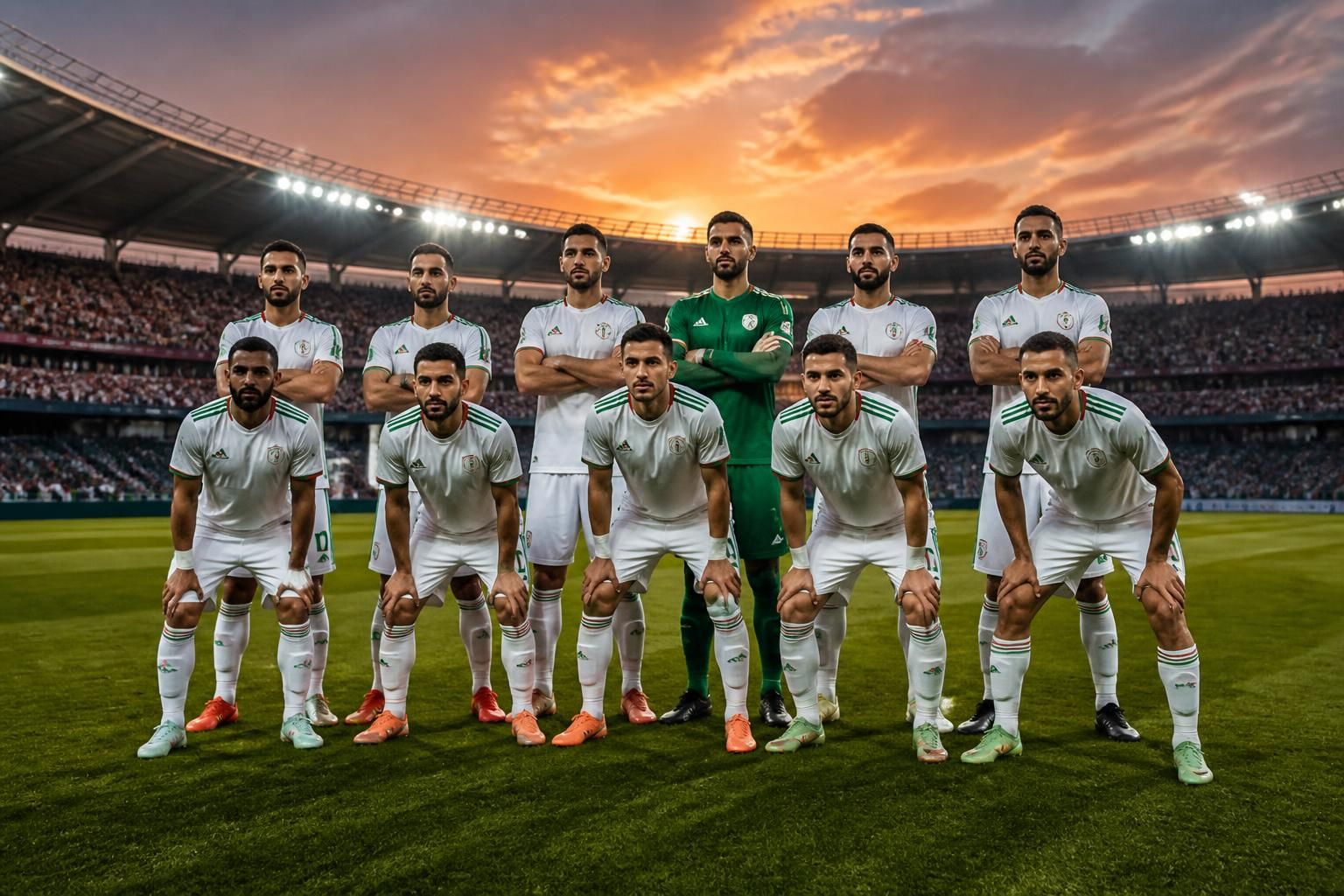
Algeria is back on the World Cup stage after missing the last two tournaments, and they’re doing it with a roster that mixes seasoned champions like Riyad Mahrez with a youthful European-based core ready to prove themselves. Drawn into the challenging Group J alongside giants Argentina, Austria, and Jordan, the Desert Foxes have a clear mission: get through the group and shake up the knockout rounds. The 35-year-old Mahrez, who announced this would be his final major tournament, will lead the charge, bringing experience and flair. Their group opener on June 16 in Kansas City against defending champions Argentina is nothing short of a football spectacle, one that could define Algerian football for years. That match alone promises high drama, but ultimately, the focus will be on securing wins against Austria and Jordan to secure advancement. Coach Vladimir Petkovic, known for his keen tactical mind and pragmatic yet attacking style, has crafted a squad built on high pressing and quick transitions, balanced with the occasional shift from a 4-3-3 base to a 3-4-3 to ramp up the attacking threat.
Algeria’s history at the World Cup is filled with memorable moments, starting with their legendary 1982 victory over West Germany, an event so seismic it led FIFA to change tournament group rules. Their best finish came in 2014 with a Round of 16 exit after a heartbreaker against Germany in extra time. The squad now seeks to match or surpass that feat, riding on the back of an energetic and tactically flexible lineup. While their attacking weapons are impressive, defensive vulnerabilities linger, particularly against rapid counterattacks—a concern when facing an explosive Argentine side. Still, with a squad deep in talent and a coach who knows how to navigate pressure, Algeria’s return to the World Cup should be taken seriously.
Algeria’s 2026 World Cup squad: blend of experience and fresh talent shaping the football strategy
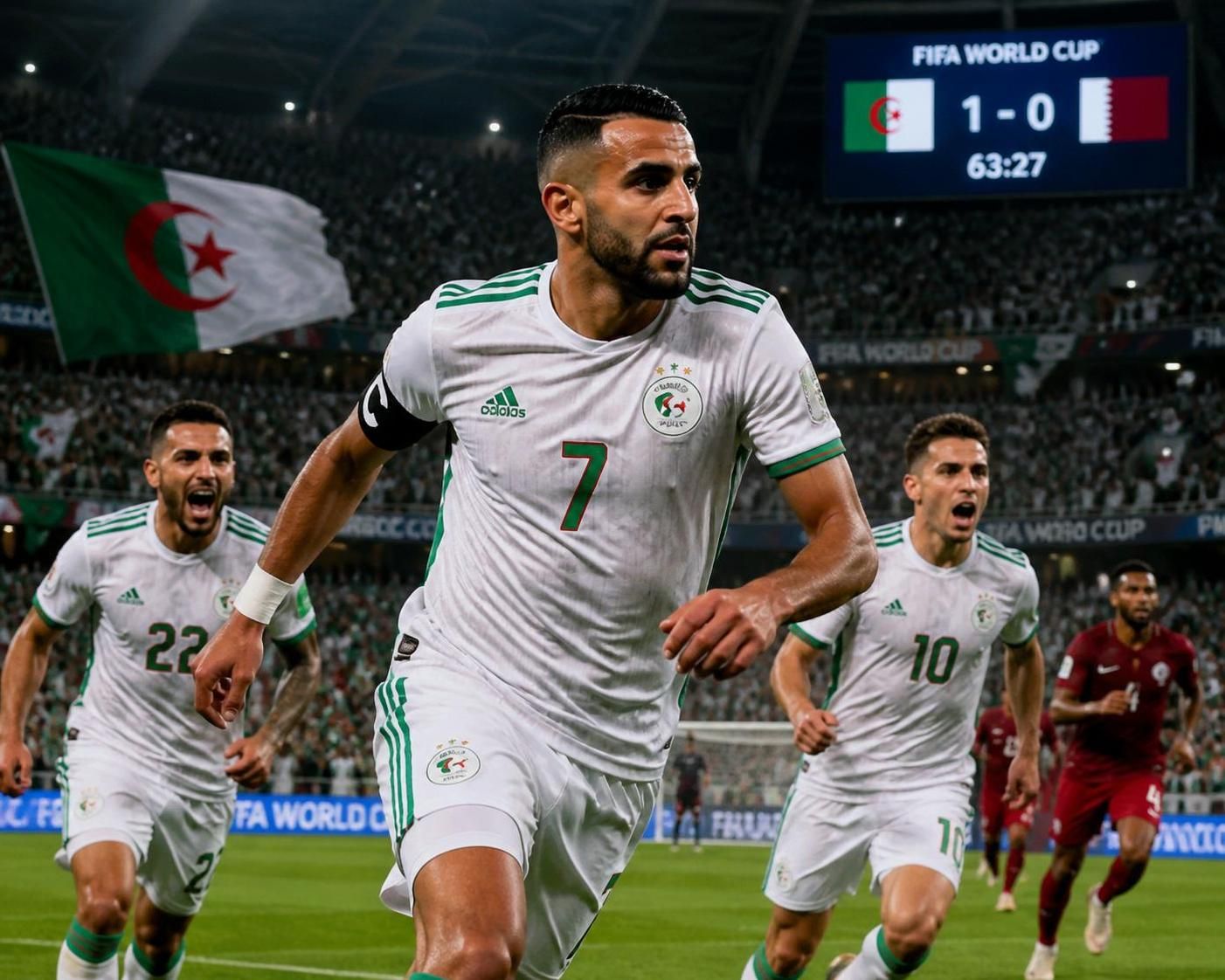
Vladimir Petkovic’s Algeria World Cup 2026 squad mixes battle-hardened veterans and emerging stars from Europe’s competitive leagues. Riyad Mahrez remains the cornerstone on the right wing, known for his silky dribbling and creative flair that unlock defenses, essential in player roles demanding both leadership and sharp execution. Up front, 24-year-old Mohamed Amoura is the squad’s pace demon, capable of slicing through defenses with ruthless efficiency, while 20-year-old Ibrahim Maza brings youthful vision and composure as a midfield orchestrator.
Defensively, the spotlight shines on Ramy Bensebaini, whose Bundesliga experience anchors Algeria’s backline with solid aerial prowess and occasional forays forward, adding an extra threat on the flank. Houssem Aouar controls midfield tempo with intricate passing and clever positioning, tempering the team’s aggressive pressing style with patience. Petkovic’s adaptable tactics—switching between a 4-3-3 and a more offensively committed 3-4-3—reflect his intent to exploit spaces and put pressure on opponents, but not without risks. Football strategy here is a balancing act between attack-minded exuberance and pragmatic defense, crucial in this high-stakes group.
Early challenge and group dynamics: Algeria’s clash with Argentina and tactical implications
Algeria’s opening match against Argentina on June 16 is more than just a game; it’s a trial by fire. Facing the reigning champions, led by stellar talent, Algeria’s defense will need to hold firm against the swift counterattacks that have troubled them in the past. The high defensive line preferred by Petkovic might be a double-edged sword here, vulnerable to Argentina’s rapid breaks. But an upset or even a draw would dramatically alter the group’s dynamics.
Following that, Algeria’s games against Jordan and Austria offer more favorable matchups. A victory over Jordan on June 22 is vital to building confidence and securing points, while the June 27 game against Austria will likely be the defining group stage encounter for qualification hopes. Austria’s disciplined and physical style demands Algeria to bring their tactical A-game, balancing aggressive pressing with defensive solidity. For the latest updates on the Jordan-Algeria World Cup clash, it’s worth checking out Jordan vs Algeria World Cup preview to get a full sense of the stakes and player battles.
Vladimir Petkovic: shaping Algeria’s competitive edge with tactical nuance
Petkovic’s coaching pedigree brings a strategic edge that Algerian football has been missing in recent tournaments. His pragmatic approach marries defensive organization with an appetite for forward momentum, crafting a team ready to challenge but flexible enough to adapt under pressure. The Swiss-born Bosnian’s experience with Switzerland’s national team has filtered into his current philosophy—one that emphasizes high-energy pressing and rapid vertical transitions.
This tactical versatility, shifting from a baseline 4-3-3 into an attacking 3-4-3 when the moment calls, empowers key players to exploit the flanks and overload defenses. Mahrez and Amoura are crucial in these maneuvers, while the midfield engine room, led by Aouar and Maza, ensures control and creativity. However, the defensive rhythm remains fragile—the squad’s ability to stay compact and avoid being stretched will likely be Algeria’s determining factor in close encounters against powerhouses like Argentina.
Key Moments and Player Impact: Decoding Algeria’s player roles on the World Cup stage
Algeria’s success heavily relies on Riyad Mahrez’s ability to influence the game with his experience and creativity. Despite his age, his vision and ball control remain world-class assets, critical in breaking down tight defenses. Meanwhile, Amoura’s speed and directness provide an ideal outlet for quick counters, complementing Mahrez’s more composed style. Young Ibrahim Maza’s rise adds an unpredictable spark in midfield, blending youthful daring with technical prowess.
On the defensive front, Ramy Bensebaini’s aerial dominance and precise positioning offer some respite for a backline that otherwise risks exposure due to Algeria’s adventurous playing style. It’s these individual player roles combined with Petkovic’s overarching tactics that will define Algeria’s path forward. Their ability to weave these elements into a cohesive unit will be put to the test in a tournament where every match could be a brutal chess match.