
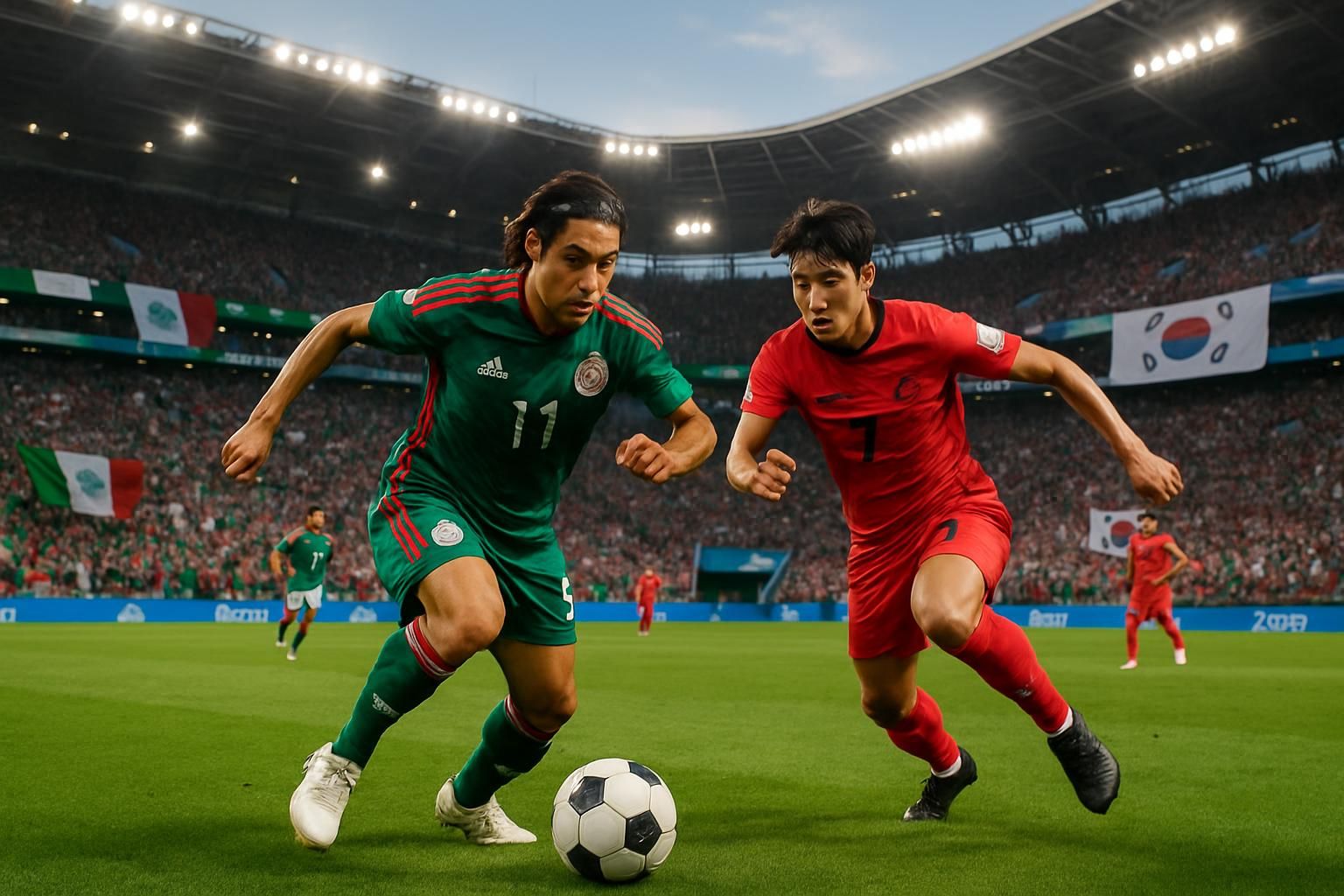
The anticipation for the Mexico vs. South Korea fixture in the World Cup 2026 is reaching fever pitch, and for good reason. This Group A battle at the iconic Estadio Azteca is not just a clash of skill but a collision of two contrasting tactical philosophies. Mexico will rely heavily on their technical prowess and ball retention to dominate proceedings, while South Korea’s trademark high-intensity pressing led by the ever-dangerous Son Heung-min aims to disrupt and counterattack with pace. The home advantage for Mexico is undeniable, amplified by the stadium’s high altitude and the roaring support of 83,000 passionate fans. Yet, South Korea’s resilience and physicality make them no pushovers, promising a contest dripping with tension and strategic depth.
Historically, this matchup carries a balanced weight. Mexico’s four wins against South Korea’s two in their nine meetings inject a psychological edge, but football rarely bows to history alone. Injuries on both sides, including Mexico’s Edson Álvarez and South Korea’s In-beom Hwang, add intriguing layers to team selection and game management. We should expect a tactical chess game between coaches Javier Aguirre and Hong Myung-bo, where every substitution and formation adjustment could tip the scales. The duel between Santiago Giménez and Son Heung-min will be a highlight, showcasing individual brilliance within the broader tactical framework. For a deeper dive into the evolving football landscape of the World Cup 2026, check out comprehensive World Cup predictions that cover other group fixtures and emerging narratives.
Mexico’s Tactical Control vs South Korea’s Relentless Press in World Cup 2026
At the heart of this Mexico vs South Korea showdown lies a clash of styles emblematic of modern football tactics. Mexico’s favored 4-3-3 formation emphasizes patience and control, weaving intricate passing sequences to unlock defenses. The altitude of Mexico City not only bolsters their endurance but saps visiting teams, a strategic edge often underestimated by outsiders. Meanwhile, South Korea’s 4-2-3-1 setup revolves around a frenetic pressing game designed to force mistakes and accelerate transitions. This strategy capitalizes on Son Heung-min’s electric pace and sharp finishing, making him the linchpin of South Korean attacks.
These contrasting approaches shape the game’s rhythm — where Mexico aims to dictate tempo and keep possession, South Korea will strive to unsettle that rhythm with bursts of energy and rapid counterattacks. The midfield battle will be crucial, especially with some key absences – Mexico’s injury woes thinning their defensive midfield options and South Korea missing the creative spark of Hwang. The outcome hinges on which side can better impose their tactical will over 90 minutes, and how effectively they adapt as the game flows. For those intrigued by such tactical intrigue, there’s rich analysis to explore in soccer betting and matchup previews like the Mexico vs South Africa prediction that highlight similar strategic battles.
Key Player Showdowns That Could Decide the Match Outcome
Beyond the formations and game plans, star players inevitably define these critical World Cup moments. Santiago Giménez shoulders the responsibility for Mexico’s attack, teaming up with Berterame to break down a disciplined South Korean defense marshaled by veterans Jun-Soo and Hyun-Taek. Giménez’s movement and finishing need to be clinical, especially when space tightens under South Korea’s pressing.
On the flip side, Son Heung-min remains the quintessential X-factor for South Korea, a player capable of game-changing moments with his skill, vision, and goal threat. Supported by Baek and Gue-Sung, Son seeks to exploit Mexico’s defensive line, testing the resolve of Mexico’s backline led by figures like Águila. The interplay between these key players reflects bigger tactical narratives about pace versus possession, and instinct versus structure. Their individual duels could very well tip the balance in a match where a single goal might determine trajectories.
The Broader Context and Significance of the World Cup 2026 Matchup
This World Cup 2026 matchup transcends a mere game of soccer; it carries deep cultural and sporting symbolism. Mexico, with its passionate fanbase and storied World Cup history, hosting matches in the legendary Estadio Azteca, cements its place as a global soccer powerhouse. South Korea’s evolution into a formidable football nation over recent decades, highlighted by consistent World Cup qualifications and notable upsets, exemplifies football’s expanding global reach and emerging powers.
This match encapsulates the essence of the World Cup’s drama—where underdogs challenge giants, where tactical nous meets raw emotion, and where the unpredictable nature of football births legends. It also highlights how injuries, altitude, and home support merge to create a unique cauldron that tests every player’s mental and physical fortitude. The Mexico vs South Korea game will resonate far beyond Group A’s standings, adding new chapters to each nation’s World Cup legacy.
Fans eager for comprehensive coverage of the World Cup 2026’s unfolding drama and expert analysis of crucial encounters will find valuable insights alongside broader tournament narratives at World Cup prediction resources. This platform provides detailed previews, stats, and tactical breakdowns that enrich the viewing experience.