
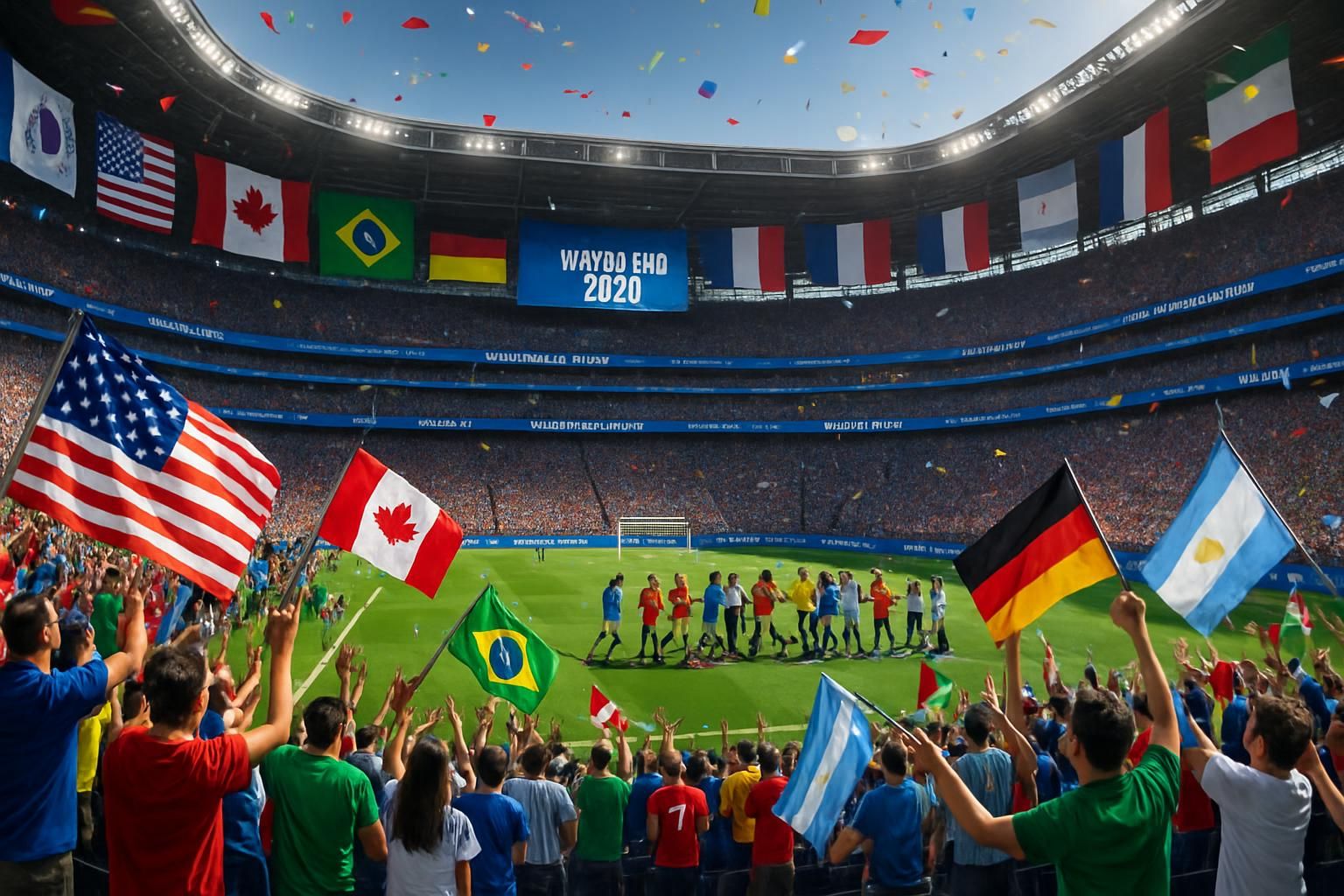
The stage is set for what promises to be the most expansive and exhilarating World Cup spectacle ever witnessed. With the 2026 FIFA World Cup breaking new ground as the first tournament to feature 48 teams, the excitement around the globe is palpable. Hosted across the sprawling landscapes of the United States, Canada, and Mexico, the event kicks off on June 11, signaling a true North American football festival.
Qualification battles have been nothing short of dramatic, leading to a diverse assembly of soccer powerhouses and fresh faces alike. Automatic entries for the host nations—United States, Mexico, and Canada—have been joined by a determined ensemble of 45 other nations across the six continental confederations. This broad representation brings fresh clashes and potential upsets, promising to shock both fans and pundits.
Making its debut appearance or returning after some dry spells, nations like Cape Verde, Curacao, Jordan, and Uzbekistan join the field, injecting unpredictability into the tournament’s group stages. Meanwhile, established giants from UEFA confirm their participation following fiercely contested playoffs that saw some traditional giants like Italy unfortunately missing out once again.
Amidst all odds and surprises, the 2026 World Cup will feature 104 matches, the highest ever in World Cup history, employing a unique format where 12 groups of four teams compete in a rigorous group stage, followed by an expanded knockout phase of 32 teams. This format promises to keep eyes glued to every pitch, with the caveat that it might stretch the attention span of even the most ardent soccer buffs.
The global soccer community will be keenly watching not only the on-field contest but also how this unprecedented tournament format influences tactics, player stamina, and fan engagement. A detailed qualification update and the team list below shed light on who will dazzle under the blinding stage lights and who might become the tournament’s memorable dark horses.
Here’s a quick rundown of the essentials you need to know about the 2026 World Cup qualified teams and the tournament layout:
- ⚽ The 48 teams include giants from UEFA, CAF, AFC, CONCACAF, CONMEBOL, and OFC, showcasing a more global tournament than ever before.
- ⚽ Confirmation of all spots transpired recently with some tense playoff finishes, including the final qualifications for Bosnia and Herzegovina, Sweden, Türkiye, Czechia, DR Congo, and Iraq.
- ⚽ Host nations automatically qualify, with the USA, Mexico, and Canada eager to capitalize on home advantage.
- ⚽ The tournament will unfold from June 11 to July 19, spanning iconic venues like Estadio Azteca, SoFi Stadium, and Toronto’s BMO Field.
- ⚽ The group stage competition format offers a fresh twist: the top two teams from each group plus the eight best third-placed teams advance to a daunting 32-team knockout stage.
Full list of 2026 World Cup qualified teams by continent
Qualification campaigns have shaped a colorful mosaic of soccer cultures. Asia’s contingent includes powerhouses like Japan, South Korea, and Australia, with lesser-highlighted nations such as Uzbekistan making their maiden appearance. Africa’s nine direct qualifiers feature Morocco and Senegal, nations eager to build on recent strong World Cup showings. South America keeps its usual fiercely competitive quota with heavyweights like Brazil and Argentina locking horns once again. Europe’s vast group ups its ante with 16 teams, including perennial contenders France, England, and Germany, plus fresh blood like Bosnia and Herzegovina, who stunned Italy in playoffs.
North and Central America, bolstered by three hosts, also contributes a handful of qualifiers that promise to be among the bitterest group-stage competitors. And don’t discount New Zealand, Oceania’s ambassador, eager to prove that smaller confederations can roar on the global stage.
Check out detailed predictions and in-depth analyses here to get a feel for who might shake up the tournament and who’s poised for glory.
Understanding the new tournament format and pivotal dates
The expanded tournament structure isn’t just a numbers game. With more teams, FIFA aims to foster inclusivity and give emerging football nations a platform to showcase their talent against the elites. The groups are weighted through a seeding method to balance the playing field but expect chaos as underdogs may well spring surprises. The knockout rounds promise all the drama and heartbreak we love: one loss and the dream dies.
The opening match is set for June 11, with Mexico taking the stage against South Africa at the iconic Estadio Azteca—a venue with a storied World Cup history. The U.S. and Canada follow on June 12, facing off against Paraguay and Bosnia and Herzegovina respectively. This staggered start adds flavor to the opening week as fans can soak in multiple kickoffs across venues.
For a complete view on the scheduling and the location logistics of the tournament, the official World Cup venues and timeline details offer comprehensive insight for fans planning their soccer pilgrimage.
Shifts in global power: Surprises and headline makers in qualification
Every World Cup throws up shockers, but the road to 2026 was littered with headline moments. Italy’s absence for a third consecutive FIFA World Cup sent shockwaves throughout European soccer, underscoring how permastellar status is no guarantee of passage in modern qualification fights. Bosnia and Herzegovina’s penalty shootout win over Italy in the playoffs is a testament to shifting dynamics and the rising competitiveness of smaller nations.
Debutants like Cape Verde, Curacao, Jordan, and Uzbekistan bring narratives of hope and ambition that will spice the group stages. The size of Curacao, the smallest population nation ever in a male World Cup, is a heartwarming reminder that passion can punch above weight.
Meanwhile, established contenders like Portugal and France are entering the tournament with strong squads, ready to challenge for the title. Fans curious about how these titans might fare in the new 48-team format can dive into strategic matchups and expert insights—such as the France vs Senegal prediction and in-depth analyses of Portugal’s chances in their group stage.
The tapestry of the 2026 tournament is as vibrant as it is unpredictable, making for an unmissable sporting spectacle where every match carries the weight of history.