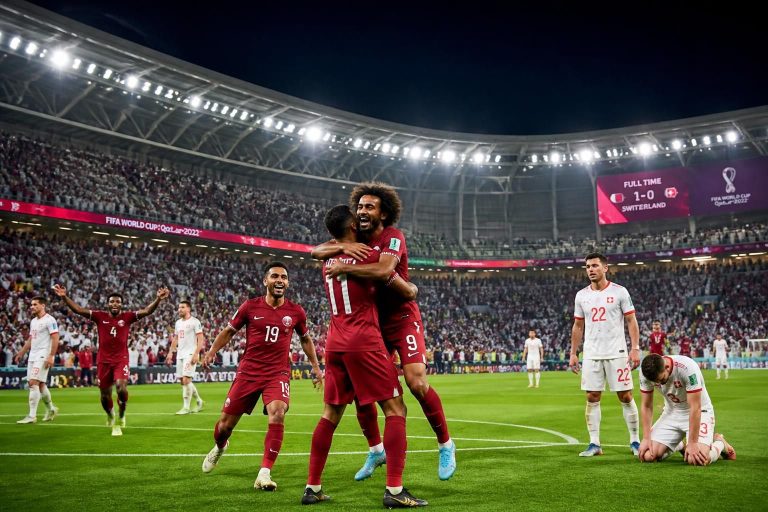
The 2026 FIFA World Cup is shaping up to be one of the most exciting and expansive editions of the tournament ever. For the first time, a whopping 48 teams will vie for the coveted trophy, with 42 already qualified and the remaining 6 spots to be fought for in dramatic playoffs across six continents. Co-hosted by Canada, Mexico, and the United States, this marks the first World Cup hosted across three nations, promising a logistical spectacle and footballing fiesta running from June 11 to July 19, 2026. Beyond the usual powerhouses like Brazil, Argentina, France, and Germany, the tournament will showcase emerging soccer nations seizing their opportunity on the grandest stage. The qualifying rounds have been a rollercoaster of emotions — surprising underdogs clinching slots, established giants playing tense playoffs, and heartbreaks marking the end of some iconic runs. Buckle up: this World Cup will rewrite the football tournament playbook with its expanded format, new host cities, and breathtaking international teams ready to battle it out in the world’s most beloved sport.
In brief:
- 🌍 48 teams will compete across 12 groups, making this the largest World Cup ever.
- 🏟️ Canada, Mexico, and the USA are co-hosting, guaranteeing automatic qualification.
- ⚽ Qualification drama saw underdogs like Cape Verde and Curacao qualify, while some giants like Italy and Nigeria faced shock elimination.
- 🎉 The tournament starts June 11 in Mexico City and ends July 19 with the final in New Jersey.
- 🔎 Expect innovations in format, increased matches (104 total), and intense competition among World Cup favorites and dark horses alike.
Which soccer teams have secured spots for the 2026 World Cup and what stands out
The road to the 2026 World Cup has been a marathon of qualifying matches, stretching across continents and confederations. The three host countries—Canada, Mexico, and the United States—secured automatic group stage qualifications, each assigned to separate groups (Mexico in Group A, Canada in Group B, and the USA in Group D) to spread the home advantage fairly. Aside from the hosts, the usual suspects from football powerhouses are present, but there’s a refreshing blend of new faces adding spice to the international mix.
For example, Africa contributes an impressive 9 direct spots, a sign of the continent’s rising football prowess, with Morocco, Tunisia, and Ghana ready to showcase emerging talent. Asia’s contingent of 8 has some surprises like Uzbekistan and Jordan making their World Cup debuts, reshaping expectations about international teams traditionally considered outside the elite.
In Europe, a whopping 16 teams have qualified directly, but the drama continues in the playoffs. Italy’s absence from direct qualification has set up one of the tensest playoff battles featuring nations like Bosnia and Herzegovina, Sweden, and Czech Republic, fighting for the final UEFA berths. South America’s top six — including World Cup-winning giants Brazil and Argentina — prepared as usual to dominate, with Uruguay and Colombia adding to the competitive mix. Oceania is represented by New Zealand, who defied the odds once again to claim their spot.
This qualifying saga has been full of nail-biting moments, from matches stretching late into stoppage time to shocking eliminations that remind us why every round counts in the marathon of team qualification.
Qualification shockers and surprising contenders to watch
Among the more unexpected success stories is tiny Curacao, the smallest nation ever to qualify, proving underdogs still have plenty of magic. Haiti also booked their World Cup return after 52 years, along with Panama, stirring excitement among CONCACAF fans. Meanwhile, big names like Nigeria, Greece, and Cameroon saw their qualification hopes end abruptly, underscoring the growing parity and unpredictability of international football.
These narratives fuel the World Cup predictions frenzy as fans and experts start to speculate which emerging teams might become the tournament’s dark horses. Keep an eye on teams like Cape Verde, Uzbekistan, and Iraq, who, while less heralded, could surprise nations accustomed to dominating titles.
What to expect from the 2026 FIFA World Cup tournament format and innovations
The 2026 edition will rewrite the World Cup rulebook with its expanded format: twelve groups of four teams each face off, and the knockout phase extends beyond the traditional Round of 16. Two top teams from each group, plus the eight best third-placed teams, will advance, swelling the knockout stage to 32 teams—a first in World Cup history. This format promises more matches — 104 in total — translating to greater opportunities for teams to showcase their talent, but also extending the tournament’s drama and unpredictability.
Matches will take place across 16 stadiums in 16 host cities stretched over the tri-nation co-hosting zone, from the vibrant pitches in Mexico City to the state-of-the-art arenas in the United States and Canada. The World Cup venues were carefully selected to blend historic football culture with modern infrastructure, setting the stage for what organizers hope will be a seamless tournament experience for teams and fans alike.
Innovations like team-based training camps facilitate better preparation and recovery, while improvements in broadcasting and fan engagement aim to elevate the viewing experience around the globe. Looking ahead, the 2026 World Cup is not just a football tournament but a spectacular showcase of global unity through sport.
Key tournament dates and venues to mark on the calendar
The action kicks off on June 11, 2026, with the opening match at Mexico City’s Azteca Stadium, a venue brimming with historic significance and fan fervor. The tournament’s culmination takes place on July 19, 2026, with the final hosted at the iconic MetLife Stadium in East Rutherford, New Jersey. Over this five-week period, soccer fans will witness the thrill and heartbreak emblematic of FIFA’s signature showpiece event.
With the expanded format, expect tighter scheduling and plenty of breathless matchups. This stage is set to test the tactical nous, depth, and endurance of every squad from the seasoned World Cup favorites — think Brazil, Spain, and England — to those hungry underdogs determined to etch their names in history.
Planning ahead? You can dive into the details of the teams, match-ups, and tournament expectations to form your own opinions on who might lift the trophy in what promises to be a legendary World Cup.
Regional team distribution and confederation impact on World Cup 2026
The continent-wise allocation of slots paints a fascinating picture of global football politics and growth areas. Europe leads with 16 direct slots, underscoring its traditional dominance, followed by Africa with 9 slots, Asia with 8, CONCACAF with 6 including the hosts, South America claiming 6, and Oceania just 1 direct place. Adding extra spice, inter-confederation playoffs offer a wild-card element that keeps tension high until the very end.
Based on qualifying performances, the distribution encourages competitive balance but also throws up questions about emerging markets and football’s global footprint. The vibrant presence of Canada’s soccer team for instance, reflects a growing soccer enthusiasm in North America. Likewise, powerhouse nations from Africa and Asia are proving they deserve their share of the spotlight.